
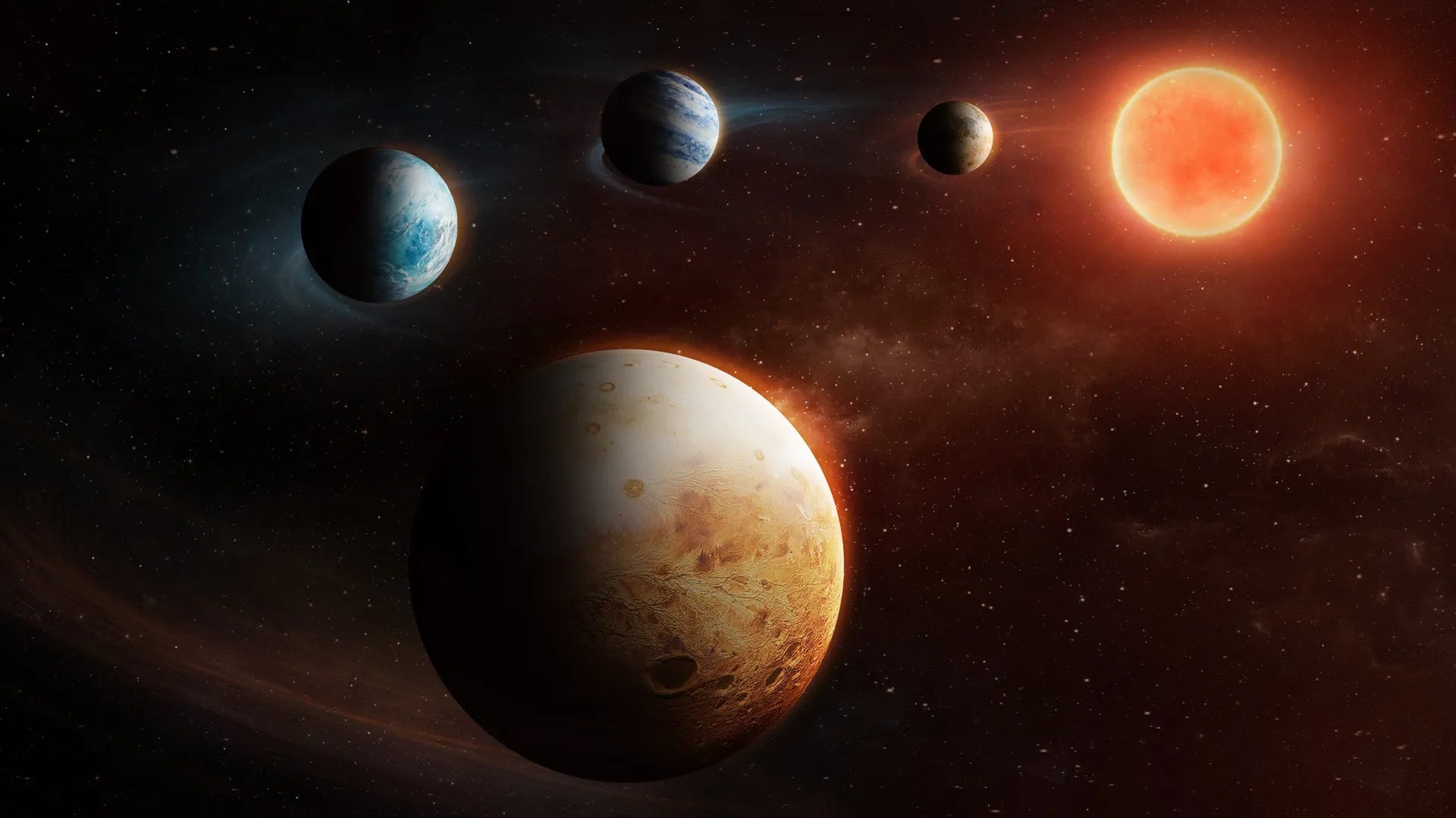
Even a cursory look at the solar system will reveal its split personality.
There are the four small, rocky planets close to the Sun and then another quartet of gas giants further out.
This pattern is reflected in a lot of the planetary systems astronomers have explored in the Milky Way.
The reason is simple: temperature.
Close to a star, the heat is so intense that the only substances that can survive are those with high boiling points. Gases like hydrogen and helium simply evaporate away.
Much further out, it is so cold that common gases like ammonia or methane freeze into solid ices.
But this week astronomers announced the discovery of a planetary system that bucks this trend.
They used the European Space Agency’s CHaracterising ExOPlanet Satellite (CHEOPS) to look at the planets surrounding the red dwarf star LHS 1903.
The system consists of a rocky planet, followed by two gas planets further out. But then there is a second rocky planet beyond that.
"This strange disorder makes it a unique inside-out system," says team lead Dr. Thomas Wilson (University of Warwick, UK).
Wilson argues that the secret behind the unusual system is that the planets formed one after the other, rather than at roughly the same time.
By the time the final, outer rocky planet formed, the gas in the system had already been hoovered up by the two gas giants.
It’s yet another example that shows our ideas about planetary formation - and exactly how it can unfold - are still in their infancy.
🎤 Live Astronomy Q&A - Sunday 22 February
8pm UK / 3pm EST / 12pm PST
Here’s your chance to ask me anything about astronomy, space and the universe during my first Q&A Live Stream taking place this coming weekend.
On the day, use the button below to join the Q&A.
I’ll be taking questions live in the chat, but you can also send me your questions ahead of time. What do you want to know?
📸 Image of The Week
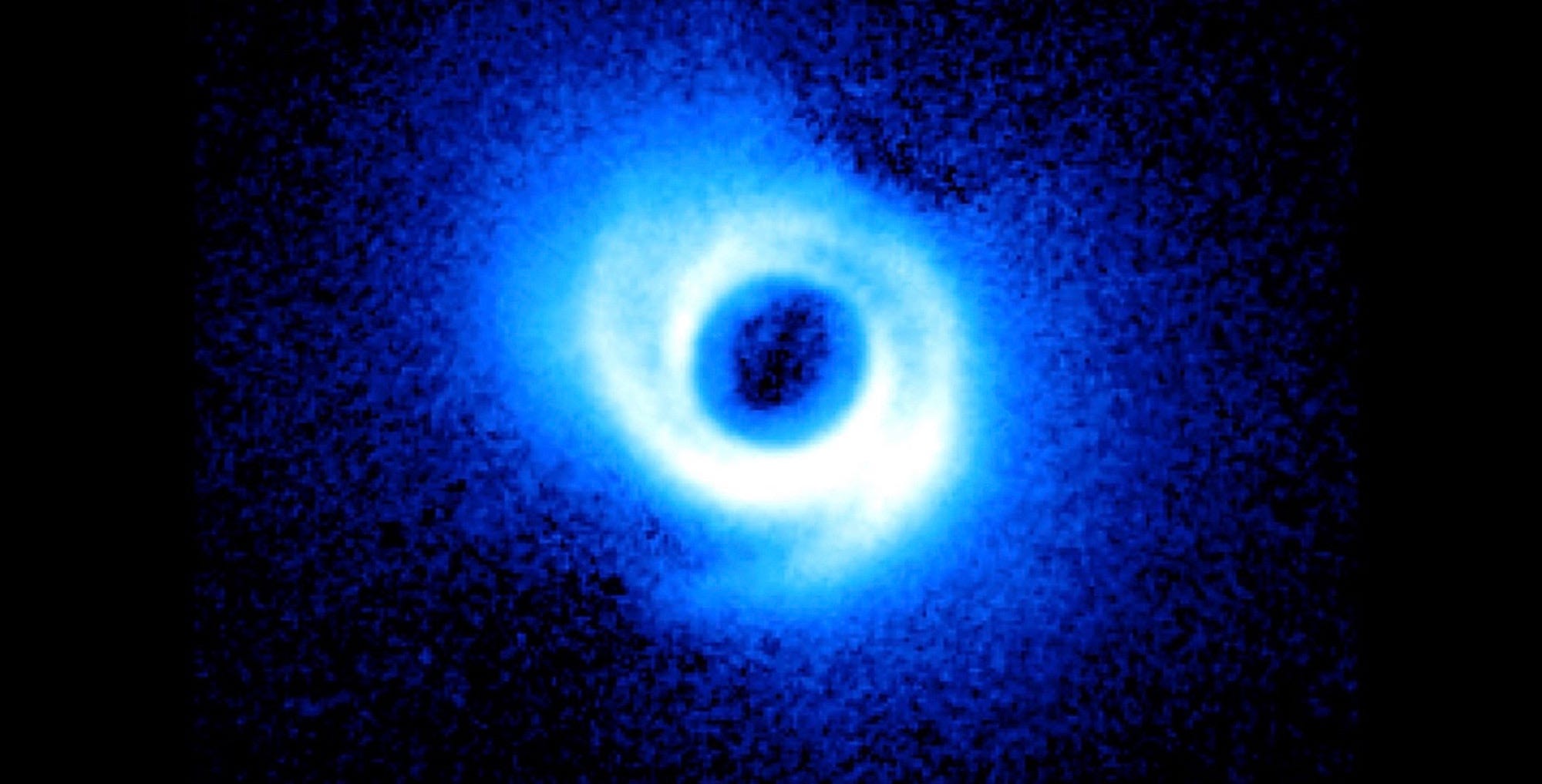
This star has spiral arms like a galaxy.
SAO 206462 is super-young at just 9 million years old.
Astronomers think that the two distinct spiral arms in the surrounding disc are caused by one or more proto-planets, each more than 10 times the mass of Jupiter.
🏛️ From the Club’s Museum of Cosmic Curiosities
Exhibit 025 - The Soviet Space Shotgun
For cosmonaut Alexei Leonov, the 1965 Voskhod 2 mission was a white-knuckle ride.
Leonov had successfully conducted the first ever spacewalk, but nearly died when he got stuck in the airlock trying to get back in.
Then, when coming home, the auto-reentry system failed, forcing the crew to land manually.
The cosmonauts ended up stranded in Siberia, where they had to survive in frozen woods with bears and wolves on the prowl. It would take two days for the rescue party to arrive.
After the helicopter had extracted them, Leonov realised that the Makarov pistol in their survival kit wouldn’t have helped much if a bear had come looking for lunch.
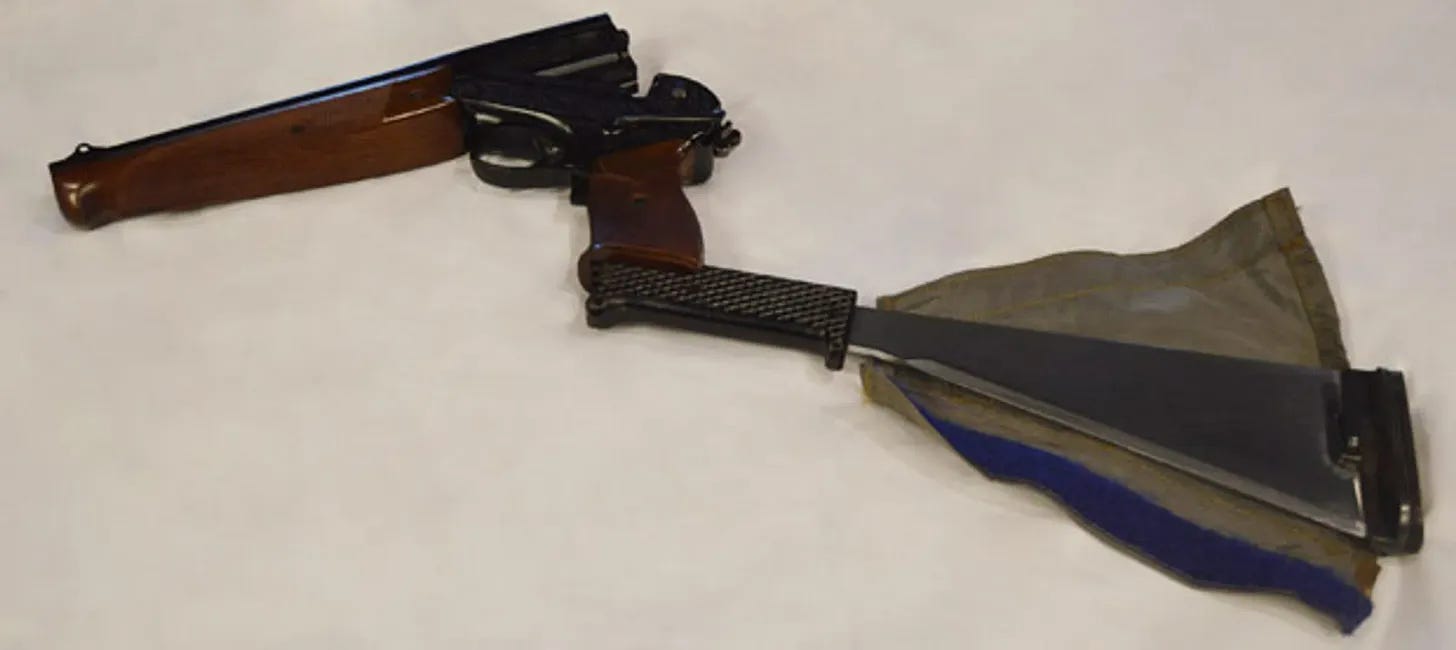
So, from 1986 to 2006, the Soyuz Portable Emergency Survival Kit carried the triple barrelled TP-82 gun. The lower barrel uses the same ammunition as an AK47 assault rifle.
The gun could be used for hunting or protection, but also for creating distress signals. The removable buttstock even becomes a shovel and a machete.
Early astronauts to the International Space Station used the guns during their survival training in the Black Sea.
Astronaut Jim Voss even recalls hurling wine, beer and vodka bottles 20-30 metres from the deck of a ship and using them for target practice.
After all, when it comes to space travel, you have to be prepared for anything.
🧭 Like this?
Your Astronomy Club membership comes with a free pass to the full Museum of Cosmic Curiosities, a growing cabinet of strange, profound & surprising objects from the history of astronomy and space exploration.
🎥 Astronomy Documentary
This week, it’s neutron stars.
They are some of the most extreme objects in the universe. A single spoonful weighs more than every person on Earth combined. But what’s going on inside them?
In other news…
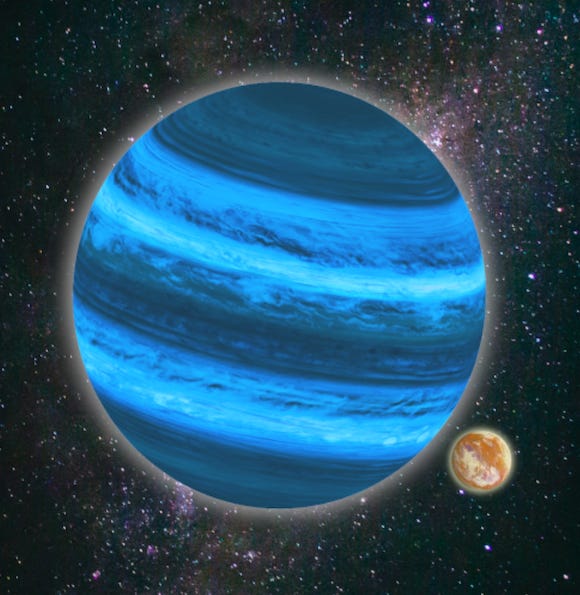
Can life begin on a moon without a sun?
Building blocks of life discovered in Bennu asteroid rewrite origin story
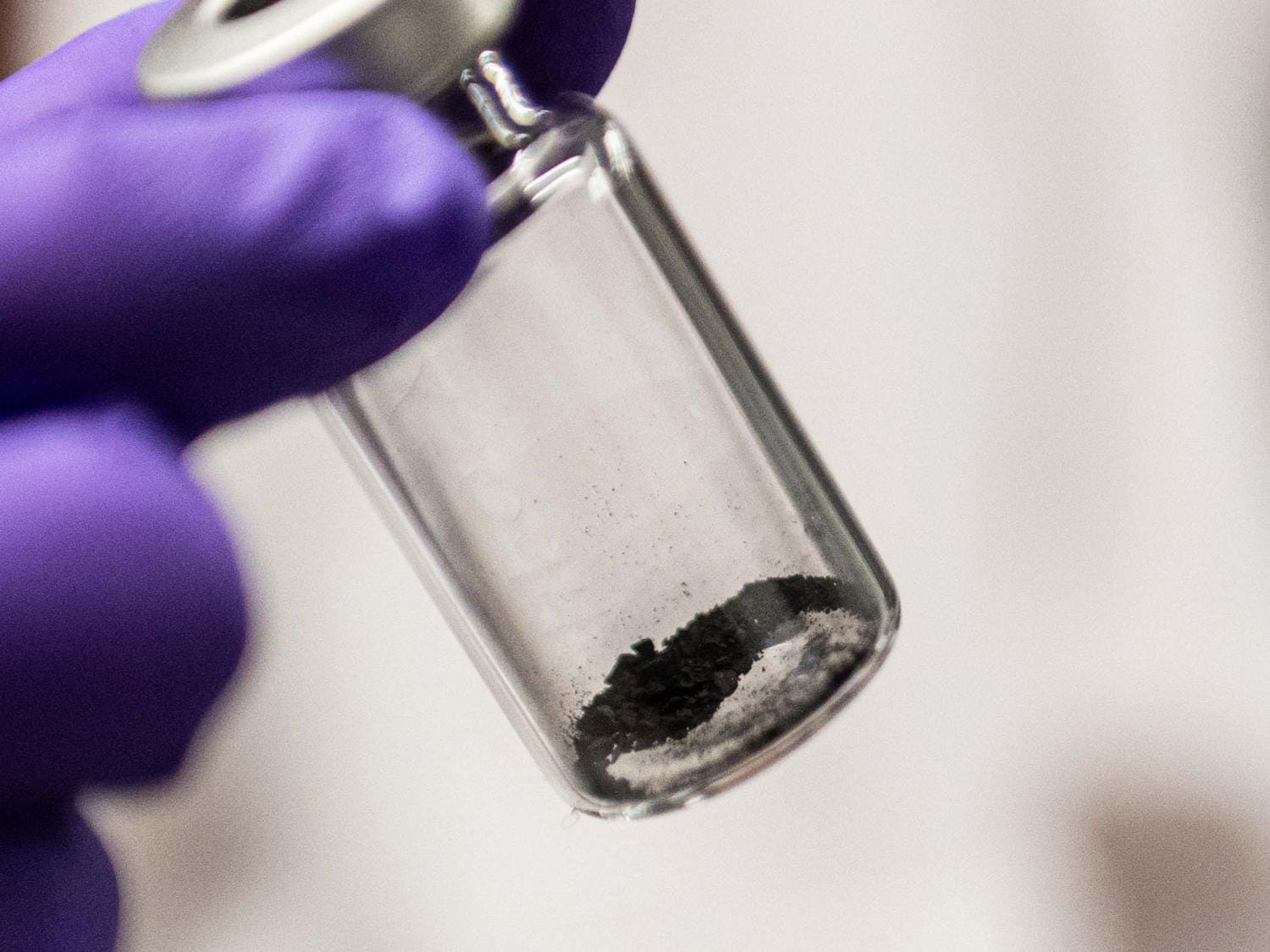
NASA experiments with extracting oxygen from Moon rocks using sunlight