


Welcome to the Museum of Cosmic Curiosities, a growing collection of strange objects, forgotten artefacts and obscure relics from the history of astronomy and space exploration. Some are profound, some are absurd, but they all have a story to tell.
🏛️ Exhibit 029 - Julius Caesar’s Comet Coin
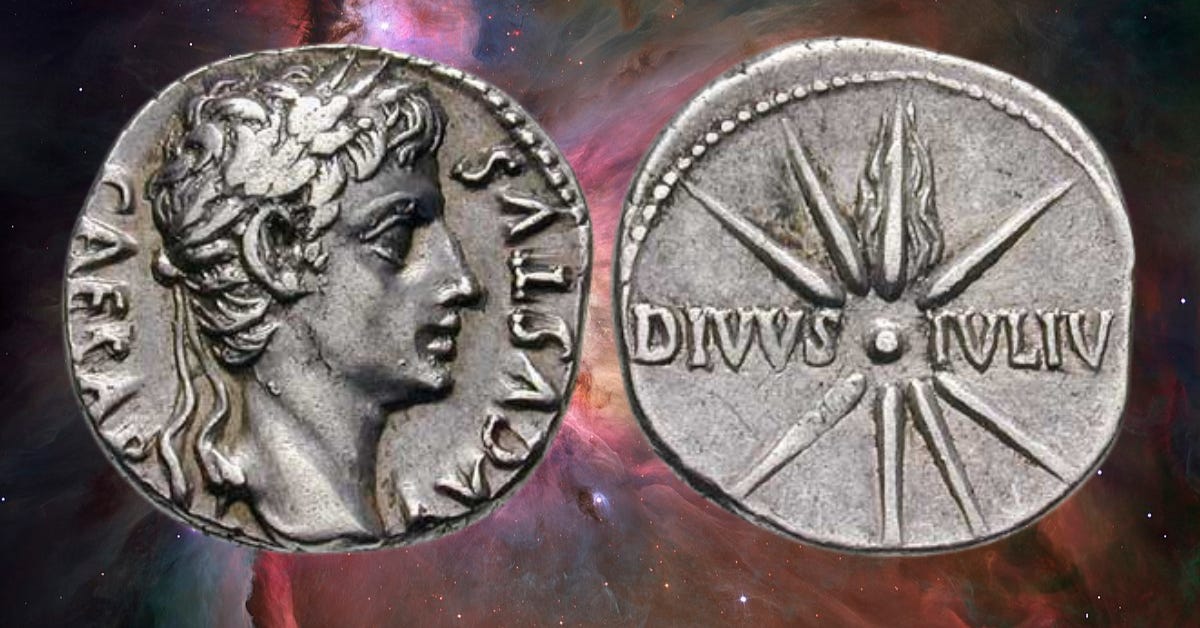
As deaths go, Julius Caesar’s was one of the most infamous. His death in the Theatre of Pompey on 15 March 44 BCE remains legendary.
Less known is that, four months after his death, a comet blazed across the daytime sky in Rome. It appeared in July, the month of Caesar’s birth and the one named after him.
Some believed it to be the soul of Caesar himself. His great-nephew and successor - Augustus - after whom August is named, latched onto the myth.
He built the Temple of The Comet Star, containing a huge image of Caesar with a comet on his forehead. It was a way to cement his power and the cult of Caesar.
In later years, silver Denarius coins were minted showing the comet on the reverse.
The British Museum even holds one of the coins that at one time belonged to King George III.
🏛️ Browse all exhibits in the Museum of Cosmic Curiosities here
🔭 Want more like this?
Keep an eye out for new Museum entries in the weekly newsletter.
Better yet, update your preferences to get future Museum posts sent straight to your inbox.
It's great how heavenly events are always interpreted as divine approval for powerful peoples' own worldly aims.